Pastor Young Kang wasn’t always a Disciple.
He was raised and trained in the Korean Methodist Church, first as a Sunday school teacher then a youth pastor.
But when he relocated to the U.S. 20 years ago, he realized that the denomination he grew up in was not adequately supporting younger generations of Korean American immigrants.
He eventually found his religious home in the Christian Church (Disciples of Christ) in the United States and Canada and with our help, he is building up Hana Christian Church, a new faith community that serves Korean Americans born and educated in the States.
Bridging cultural and linguistic divides
Pastor Kang was 22 when he moved across the world to pursue his theological education.
His call to the pastoral vocation led him to seek a different context from the mainstream conservative ministry prevalent in South Korea. Settling in Southern California, Pastor Kang became the Youth Pastor at Hana Korean Methodist Church (KMC). It was there that he saw how the rigid policies and procedures of the institutional structure in Korea failed to represent Korean Methodist congregations across North America.
As he went on to attend seminary, even his own supervisor advised him to find a different denomination—one that could better serve a generation of Korean Americans that are more linguistically and culturally familiar with American society.
“During my ministry, I witnessed a painful exodus of 1.5- and second-generation Korean Americans from the church,” Pastor Kang recalls. “This isn’t a rejection of faith, but a response to specific barriers: the hierarchies of many immigrant churches, systemic limitations of a Korea-based denomination, and a failure to address the complex identity questions of those navigating dual cultures.”
Pastor Kang earned his M.Div. program in 2020, starting his Ph.D. the following year.
A place at the table
In 202, Pastor Kang began his internship at Yedidiyah Christian Church in Norwalk, CA, where Pastors Young Jun Yang and Young Lan Kim took him under their wing. A year later, they introduced him to Minister of New Church Strategies Rev. Dr. Jose Martinez. By then, Pastor Kang was already considering forming a new place of worship under the care of the Christian Church (Disciples of Christ), one where Korean Americans of all generations flourish together, exploring their layered identities, and feeling empowered.
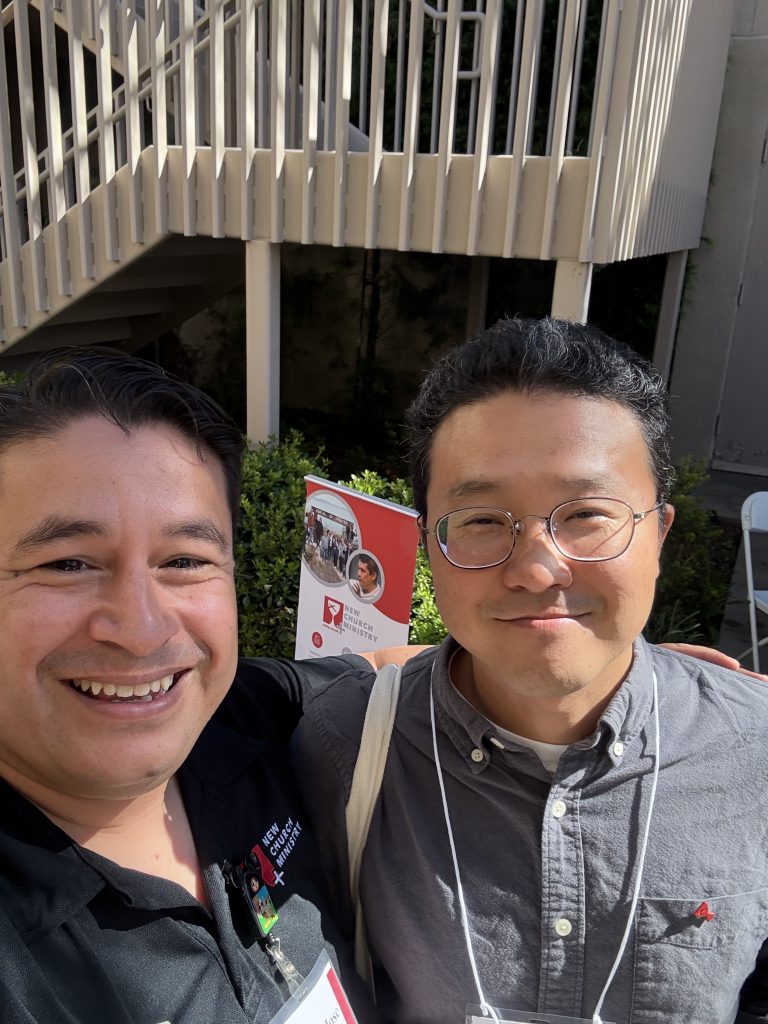
“As the son of a Methodist pastor, leaving my denomination was a significant, heartfelt decision,” he reveals. “However, the Disciples of Christ’s core values—particularly the radical inclusivity of the Open Table, its identity as an anti-racist church, and its commitment to thoughtful, non-literalist scriptural engagement—provided the exact framework I needed.”
In 2023, Pastor Kang concluded his time at Yedidiyah and continued to deepen his relationship with the DoC by attending our webinars. Pastor Kang incorporated what he learned about the Disciples ministry philosophy into strategies for his emerging faith community, Hana Christian Church (HCC), which he soft launched last year. More recently, Pastor Kang completed our online Leadership Academy course, being the first student to do so.
“I discovered that you don’t have to take big steps at first,” he says. “I want to start small, take some time to do trial and error. I want to do research on the surrounding neighborhood and identify its strengths and weaknesses.”
Inclusive worship and authentic fellowship

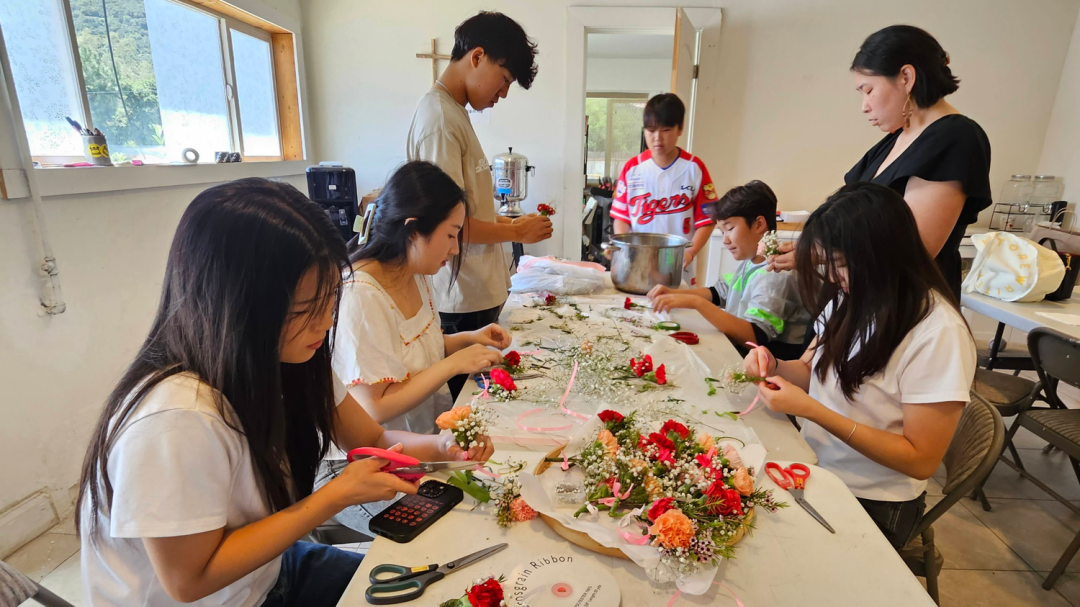
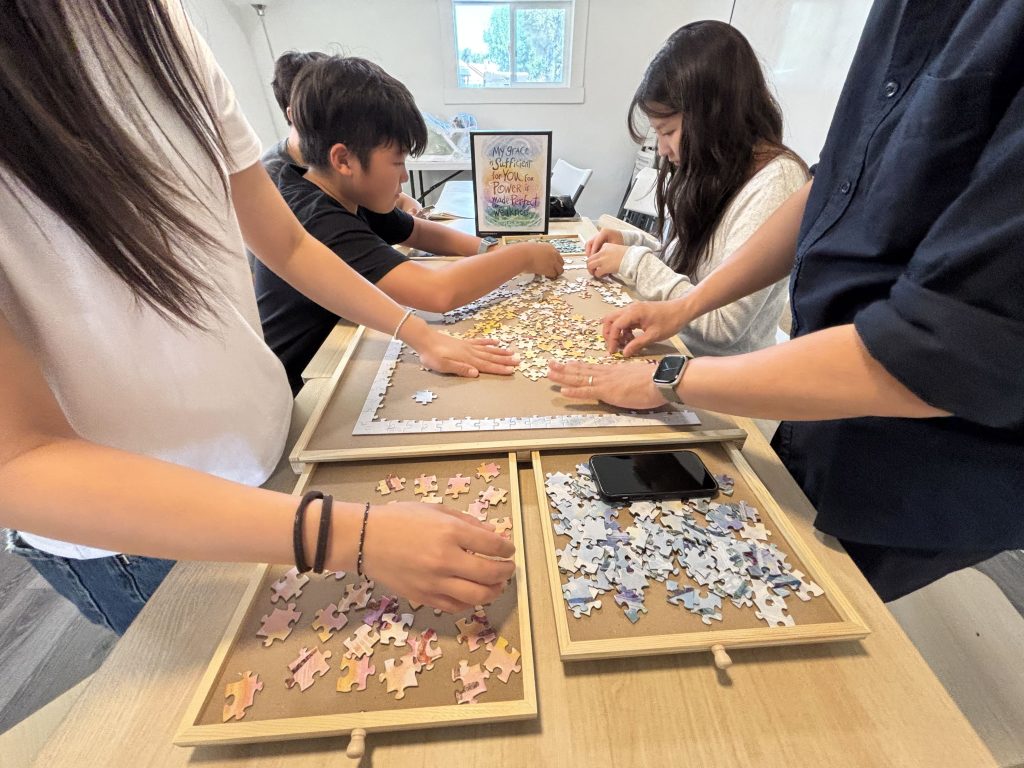
HCC—its members made up of ten or so young adults from Hana KMC—is in Sunland-Tujunga, CA, a Los Angeles neighborhood near La Crescenta-Montrose, CA and La Cañada, CA, both communities with large Korean American populations. Congregants usually gather for casual Bible Study and fellowship time, but once a month, they come together with their mother church, Hana KMC for a joint worship service.
“We are ‘putting new wine into new wineskins,’” Pastor Kang explains. “By planting within a denomination based in the U.S. and Canada, we can build a new structure, learn an inclusive ‘Disciples spirit,’ and collaborate with regional partners.”
This access to various resources from New Church Ministry and other ministries, including North American Pacific/Asian Disciples (NAPAD) and the National Benevolent Association, supports one of HCC’s four key pillars: being a hub for discipleship and leadership development. This commitment is already in action, as the church is supporting core member Joshua Nahm, who is interning at the congregation throughout his M.Div. studies at Claremont School of Theology.
Welcoming, intergenerational community
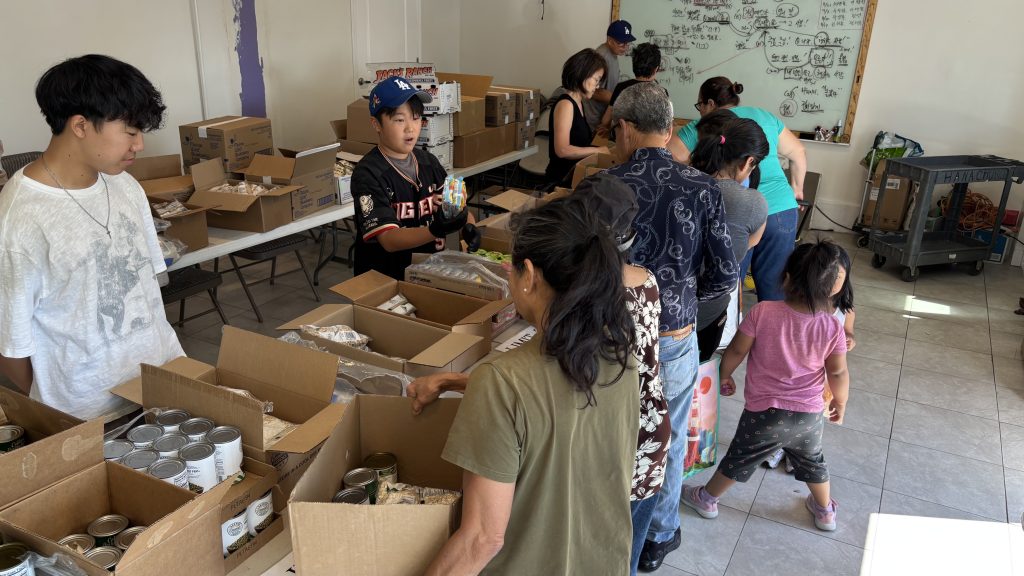
One of HCC’s other key pillars is fostering deep intergenerational bonds by maintaining its partnership with Hana KMC. Before the advent of the COVID-19 pandemic, the latter ran a food pantry for 15 years, overseen by Pastor Kang. At HCC, he has revived the ministry with his wife Sungbin Lee. Together with Hana KMC, they are collaborating with a regional food bank to distribute aid to 100 families every other week. To increase their range, they have applied for a California voucher so that they can purchase an electric step van and deliver food.
Compassionate action is another pillar of the congregation’s mission. With their youngest son having Autism Spectrum Disorder (ASD), Pastor Kang and Sungbin are connected to the state’s regional centers, which oversee the coordination and delivery of services for Californians with developmental disabilities.
“We’re a family with disabilities, so we got a lot of help from the centers,” Pastor Kang clarifies. “Sungbin and I want to give back by turning HCC into an agency of a local regional center. She majored in art and currently teaches art classes to preschoolers, so we’re working on a curriculum to provide these kinds of educational opportunities to families like ours.”
Shared stewardship
In addition to innovative outreach, therapeutic services will serve as a revenue stream to support HCC. Currently, the congregation is supported by Hana KMC, but it plans to be financially independent in five years, depending on its faith-based program for individuals with development disabilities and a bicultural family childcare home that it plans to establish. This residence-based setting will provide care for up to seven children. HCC is in the process of obtaining its license so that it can cater to young Korean American families, who often resort to sending their children to preschools in L.A.—a trip that can take an hour every day—just so that their kids can receive bilingual care.
Looking ahead
As for HCC’s future, which includes wrapping up the affiliation process with the Pacific Southwest Region,Pastor Kang continues to rely on us for guidance. He recently started meeting with Rev. Steven Smith, one of our new church coaches, who will help Pastor Kang remain on track and accountable to his goals.
“As someone who lives in an ‘in-between’ space,” he concludes, “my mission is to provide a vibrant, progressive community where the next generation of Korean Americans can transform their hybrid cultural heritage into a source of spiritual depth and prophetic witness.”
An excerpt of this blog post appeared in the December 2025 issue of the New Church Know-It-All.
