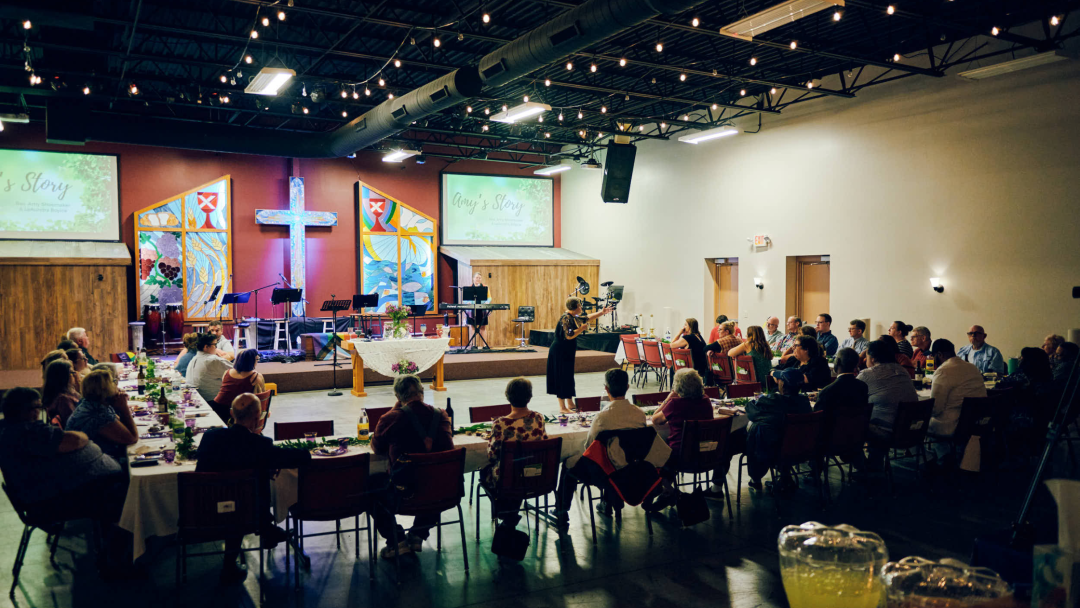
“If we want to have a future as a denomination, we need to take seriously our mission to make Disciples and be a movement for wholeness,” says Rev. Amy Shoemaker, “supporting new churches and leaders by being a safe harbor for them is absolutely essential.”
As the Associate Regional Minister of New Church in the Greater Kansas City Region, also known as KC Disciples, Rev. Amy is passionate about supporting emerging and affiliating congregations so that they can be successful.
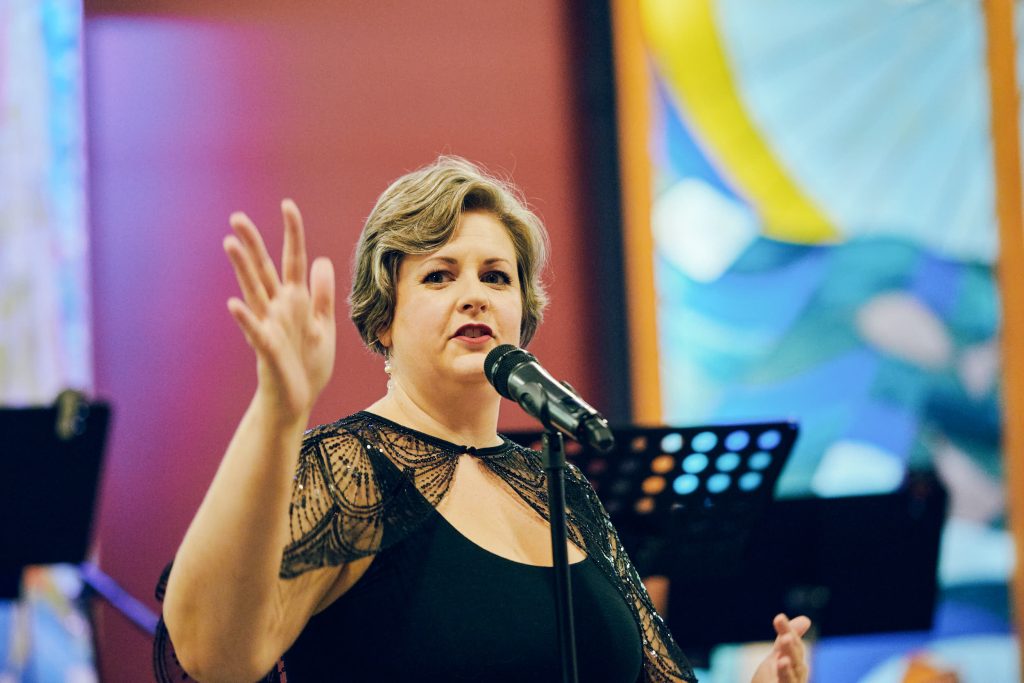
For her, the Pentecost Offering is an annual opportunity where Disciples not only can proclaim that the future of the Christian Church (Disciples of Christ) in the United States and Canada matters, but also to demonstrate to the most vulnerable clergy in the Church that their work is important.
“Money is a way that we can show love,” explains Rev. Amy. “So, it’s a very important way of supporting ministers that aren’t like you, who are doing ministry that you can’t do, and who are doing it on your behalf.”
On May 17 and 24, your participation in this Special Day Offering ensures the future of the Christian Church (Disciples of Christ) by putting love into action.
Meeting the current challenges of ministry
Usually when a pastor or other faith leader wants to start a place of worship, they don’t have access to sufficient resources.
Rev. Amy is intimately familiar with experiences like these, when she was trying to start her own faith community in 2014 and didn’t have anyone mentoring or guiding her.
So, when Rev. Amy joined the KC Disciples staff last year, she made it her goal to hold new church leaders’ hands every step of the way, to coach them, and to help them get connected to regional and general ministries.
“KC Disciples are person centered,” shares Rev. Amy. “There is no institution without the people.”
When an individual wants to start a new congregation in the Disciples of Christ, they must meet the needs of the institution, including nesting the new congregation within an existing congregation and getting standing within their region.
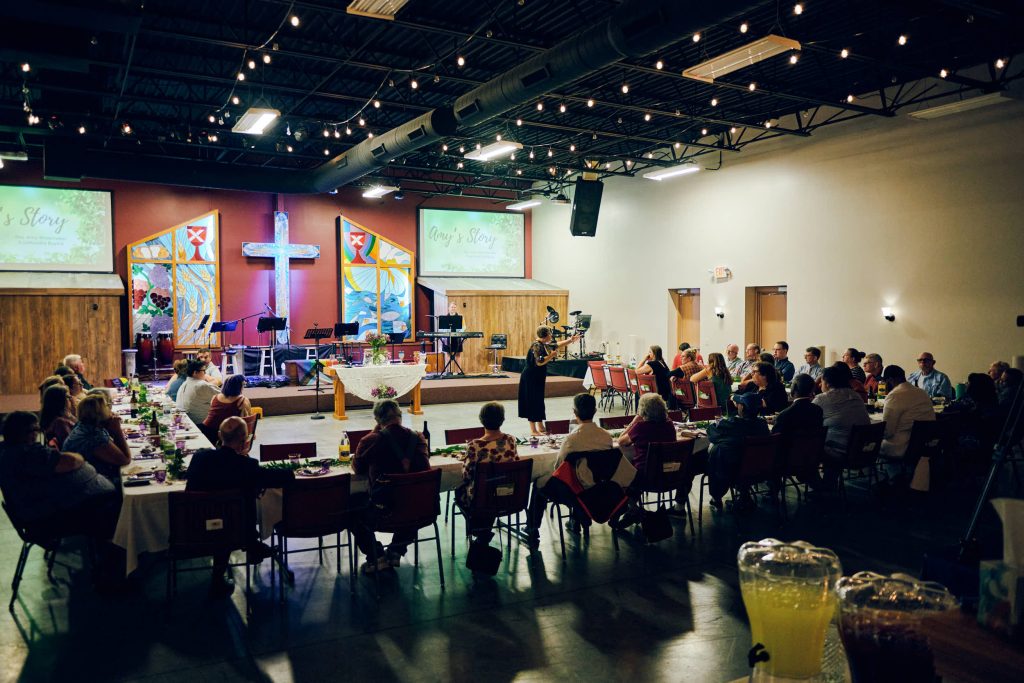
For KC Disciples, this process has been simplified as much as possible. There is no standard training program, hoops to jump through, nor red tape. The region has created a low barrier system to get pastors and core teams started on their journey. It looks at their credentials and fills in the gaps.
“Previously, the ordination and standing process is where relationships fell apart because new church pastors would deal with me at New Church and then I’d refer them over to ordination and standing,” recalls Rev. Amy. “But ordination and standing was still working in an older paradigm of ministry, and so it just wasn’t matching up.”
Instead, she has two goals in her work. The first one is to be in relationship with the people who have power in the institution as well as people who are serving, transforming, revitalizing, or affiliating a congregation. The second is to be the latter’s advocate within the institution. This goal is especially important for Rev. Amy as the ministries that are under care with the region’s Commission on Ministry Innovation represent some of the most vulnerable populations in Kansas City, from folks dealing with disability to those who have been hurt by church to people who have traditionally been left out.
“My work is evolving, but it’s always deeply rooted in radical solidarity with the people who are doing the work of ministry day in and day out,” clarifies Rev. Amy. “We’re not experts telling them what they should be doing. We recognize that they know more about their congregation than we ever will, and our role is to come alongside them. We exercise power with instead of power over.”
Justice is Love in Action and your gift to the 2026 Pentecost Offering supports efforts like these.
Creating space for organic community
So far, this approach has worked well for KC Disciples, which is the smallest geographical region in the denomination. In the past 12 months alone, it has affiliated three congregations:
- Ministerio Evangelistico Renacer, which primarily serves Spanish-speaking worshipers.
- Spirit of Hope, which has dual affiliation with the Metropolitan Community Churches denomination.
- Light of The World, which is the only open and affirming deaf congregation in the city.
As to why affiliation proves to be such a popular route, Rev. Amy has this to offer:
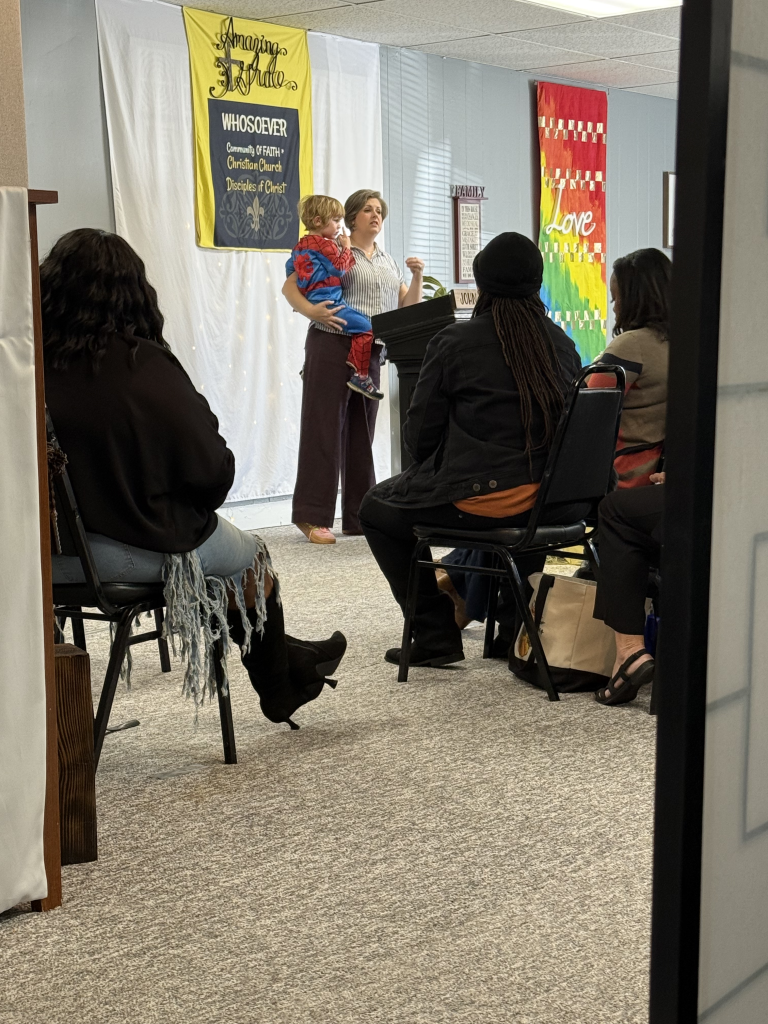
“The folks who come to me and say, ‘I want to do something different’ are not currently being served by existing congregations. Many of our affiliating congregations no longer feel at home in the denomination were they started either because there’s not enough support or their gospel interpretation has put them at odds with those identities and beliefs. For them, the Disciples is a better fit. They’ve found a home that encourages difference and a diversity of thought.”
Once congregations come under the care of the region, gifts made to the Pentecost Offering help fund the work that these churches are doing.
“People’s needs have changed over time,” reflects Rev. Amy, “and it is harder for an existing congregation to pivot to meet those needs than it is for a new church to spring up and meet those new needs within our communities.”
These funds come in the form of grants, either as grant tracks that work as monthly stipends that go directly to personnel or as one-time grants that pay for requests that other grant agencies don’t cover, such as grant writing and hosting special events.
The Commission on Ministry Innovation, which supports both spiritual leaders who are initiating and organizing new spiritual communities in Kansas City as well as those who are initiating new ministries within existing congregations, also partners with emerging congregations to find ways that they can be eligible for funding from secular institutions.
Such is the case for Independence Boulevard Christian Church (IBCC), which gave a tour to Leadership Academy participants in 2023. For the past three years, IBCC has partnered with the Commission on the creation of Intersect KC, a 501(c)(3) that manages the building as well as the justice and direct service programs that were previously under the church.
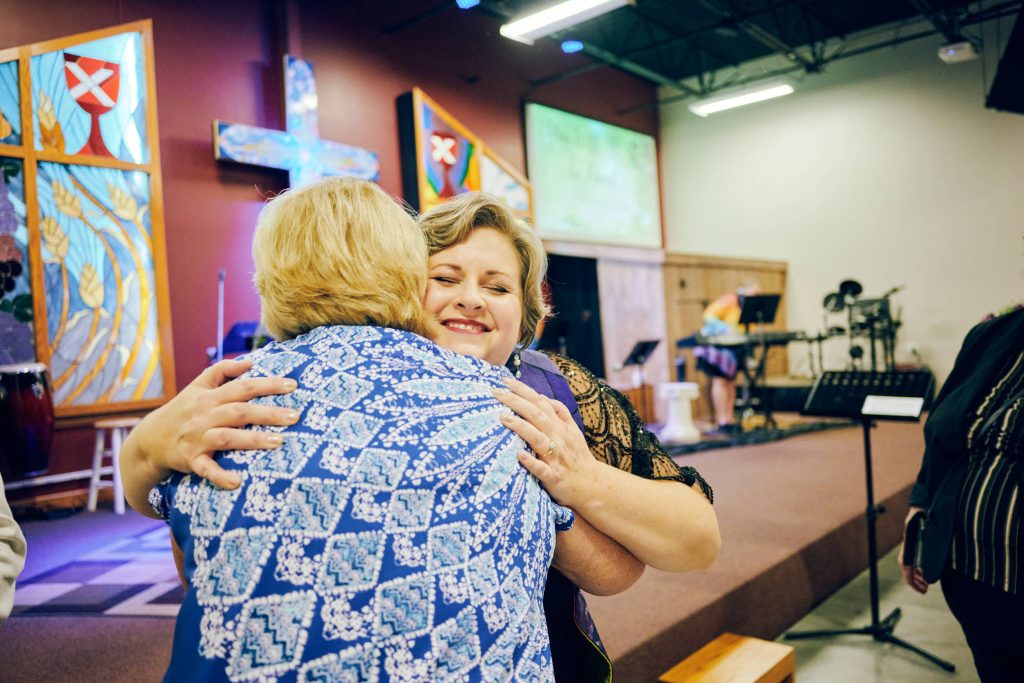
As Rev. Amy looks to what populations her region is serving and what populations need to be served, she emphasizes the strength of the denomination.
“Disciples polity, ethos, culture, and doctrine are equipped to invite more people to the table,” she concludes. “Why should we support new church? That’s what Jesus would do!”
When you give to the Pentecost Offering, half of it stays in the region in which it is received to support local new churches. The other half goes to New Church Ministry, which trains, equips, assists, and multiplies emerging and affiliating congregations and their leaders.
