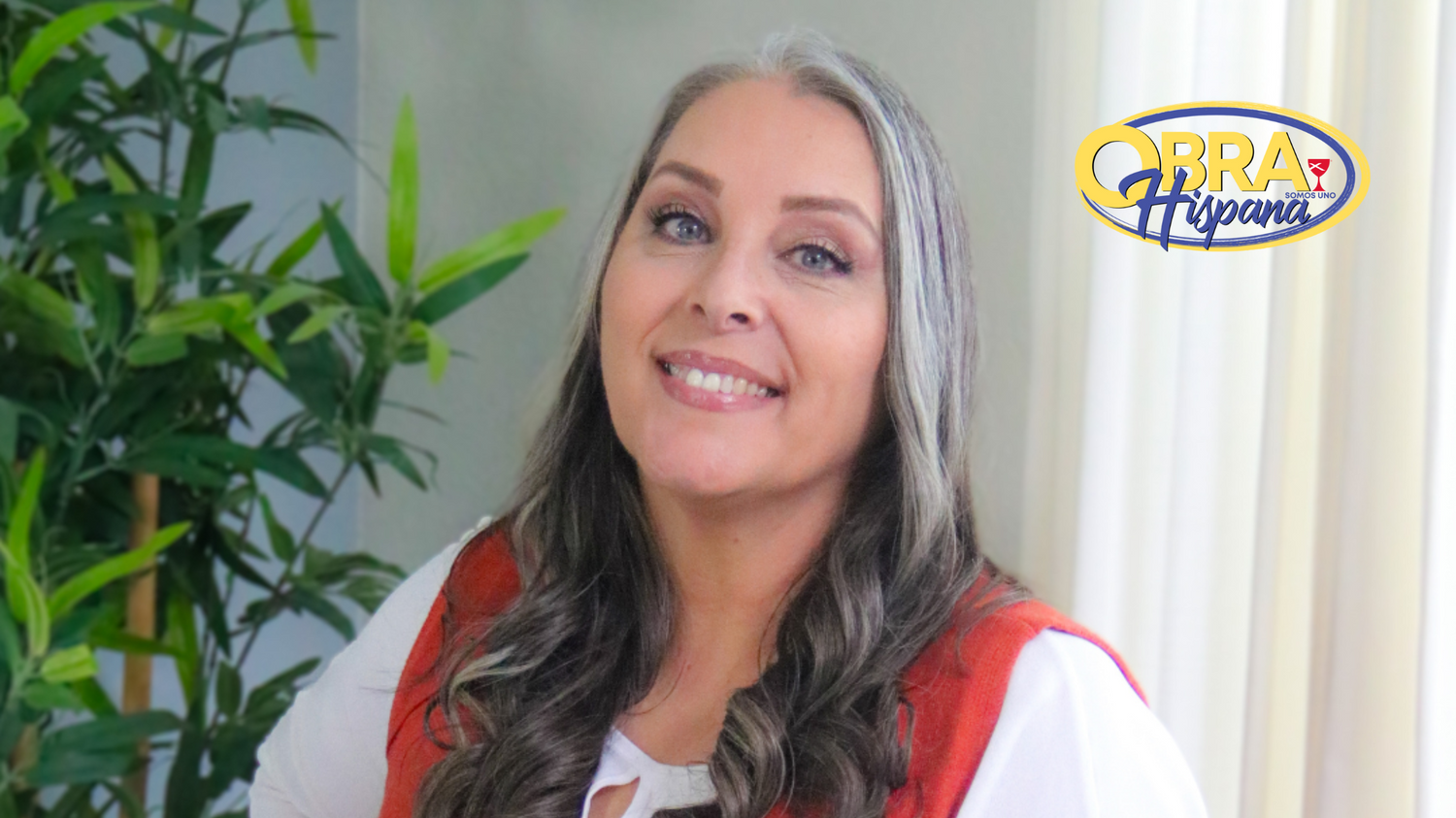
25:5 A Vision for Obra Hispana, Building Communities of Justice and Hope

In 2025, Obra Hispana launched an ambitious initiative: 25:5, a call to plant 25 churches in 5 years. This bold vision reflects a Spirit-led commitment to multiplication, equipping new leaders, and birthing innovative communities of faith that respond to urgent needs across the diverse cultural contexts of Hispanic/Latino ministries. We are grateful that Disciples Church Extension Fund’s New Church Ministry has embraced this vision and joined in full partnership to support it.

The initiative is rooted in biblical principles of discipleship and multiplication. Jesus’ method was multiplication, making disciples who make disciples, planting churches, and raising leaders who raise leaders. Guided by Matthew 28 and Ephesians 4, this effort is not about preserving tradition, but about cultivating a Spirit-led movement that reflects the Kin-dom of God across generations, cultures, and regions. The future of the Church is diverse and multicultural, and the Hispanic church is already positioned to lead this shift, having lived multicultural realities for decades within the Spanish-speaking church in the United States.

Why now? New places of worship are urgently needed. Our communities are growing, yet traditional models often fall short of reaching those hungry for belonging and transformation. A 2023 Barna study revealed that 73% of Gen Z want to change the world, and 61% want to be part of a community that fights for justice. Yet only 29% believe the church is that place. This initiative seeks to directly close that gap.

The work is underway. The next step is a Spanish-speaking, culturally relevant Church Planting Academy, held from September 24–27, 2025, in Kansas City, MO. Thirty-two planters will gather for discernment, capacity building, and innovative learning. Together, they will envision new and traditional church models: neighborhood-rooted congregations, house churches, bilingual/multilingual expressions, digital communities, and justice-driven missional collectives.

This is the right time. God is calling us not to preservation but to multiplication, to the planting of churches that will carry the gospel with power, relevance, and prophetic witness into the next generation and beyond.

An excerpt of this blog post also appeared in the September 2025 issue of our ministry’s newsletter, the New Church Know-It-All.

Helping young adults find faith in America’s heartland: The story of The Fringe

“Churches don’t represent youth without a faith background.”

As a pastor dedicated to reaching young people, Rev. Dr. Tiffany DeTienne does not mince her words when it comes to serving young adults.

“Young people are looking for something familiar,” she explains. “For many of them who do have a background in the church, youth group was often the best community of their life.”

With The Fringe, a new place of worship in Lawrence, KS, Rev. Dr. Tiffany is hoping to provide an on ramp to church for those who have no faith community.

On June 1 and 8, Disciples across the United States and Canada can support emerging and affiliating faith communities that are going beyond what’s been done before – ones just like The Fringe – by participating in the Pentecost Offering.

In the early 2010s, Rev. Dr. Tiffany was working at a robust congregation, one that boasted more than 300 attendees. Its youth ministry was just as vibrant – it saw 100 unique students a month, with 60 attending every week. While some of them came from church families, most were local students.

Even after she left her job, former students who were looking for pastoral care – whether that came in the form of a listening ear or a driver with a big car – would still reach out to her.

“A lot of our students needed someone to help move them in and out of their apartment for college,” Rev. Dr. Tiffany recalls. “And so I would connect with my old youth sponsors, and rally that support for those students.”

More than a decade later, these students became young adults – navigating college, housing insecurity, and their sexual orientations – still in search of community.

At the same time, Rev. Dr. Tiffany was also finding her place in the world and how to best use her skills to serve people who had a desire to explore their faith for the first time. She had worked as a minister in established congregations – experiences marked by what she called the “shuffling of the sheep,” or the departure of congregants from one traditional church to another. What she wanted now in her life was to convey the Good News in a language and a medium that a new generation could hear and understand. 

Rev. Dr. Tiffany speaks to those gathered at Leadership Academy 2023

“I’ve just always felt called to come back and finish the work I did with young adults, of creating a space that is welcoming and approachable,” she shares. “A space for people who don’t come from a religious background or who don’t feel like they’re represented at church.”

So Rev. Dr. Tiffany attended New Church Ministry’s Leadership Academy – an event that empowers pastors, core teams, students, and others on their journey to become movement initiators – not once, but three times. When she enrolled in the Discerners’ Track, which is designed for participants who are discerning what path God is taking them down, she did so with the intention of learning what it would take to launch a church. What she received was not only a road map for that process, but a sense of comradery with her peers.

“It was really good to be with people who shared such an outrageous dream,” she remembers. “When you have that passion and order your life around it, it can be lonely. It was so great to meet other people who were in the same boat as me.”

Finally, in Easter of last year, Rev. Dr. Tiffany launched The Fringe, so named to reflect Jesus’s ministry of serving people on the fringes of society. Its members meet every Tuesday – to accommodate the busy lives of its young adults – at a local open and affirming church. For three weeks out of the month, they gather in small groups, where Rev. Dr. Tiffany strives to take an invitational approach that is responsive to the “Rise of the Nones,” or the increasing number of religiously unaffiliated people in the United States.

Full worship gatherings use music you might hear on the radio, instead of traditional contemporary Christian songs.

“We call our sermons Text Talks, which is a play on words of TED Talks,” she says. “We always have someone tell a story after the talk that has to do with the theme of the week’s biblical text. That’s been a great way for people to get to know one another, to share their stories, to not feel alone.”

Rev. Dr. Tiffany and others will then break out into exploratory stations to engage in embodied actions or artistic expressions that corollate with the text. Prayer and communion stations are also made available.

“When communion was the only thing happening during worship, many folks at The Fringe felt it was very exclusive to our core team. That’s why we shifted to our exploratory break-out sessions,” she clarifies. “For these individuals, communion was awkward because they didn’t feel comfortable coming to the Table yet. And so that was a big discovery for me, as someone who was raised as a pastor’s kid.”

The first week of the month is reserved for “Taco ‘Bout It” Tuesdays, where people are invited to a taco place downtown. It’s an opportunity for The Fringe to create spaces for conversation that are a little freer flowing than in its small group settings.

This past year, Rev. Dr. Tiffany has also been regularly seeing Rev. Steven Smith – a New Church Ministry coach – who has provided an additional support system for her.

“You don’t run into a lot of new church folks in the denomination, so you end up not knowing a whole lot of people who share your experiences. It’s the opposite when you’re a traditional minister,” Rev. Dr. Tiffany says. “So, Rev. Steven has been a great bellwether for me and gives thoughtful advice.”

Due to its small size and lack of resources, The Fringe is currently on the lookout for ways to partner with local organizations to serve the community.

As Rev. Dr. Tiffany looks to the future, she encourages all churches – big and small, new and established – to ask themselves what it would feel like to walk into a church for the first time, and then use whatever answers come up to help expand the way that their church does ministry.

“We are in a time where people need hope, and I would love for us to get back to that in a broader way,” she concludes. “We have something of value to offer the communities that we live in.”

When you make a gift to the Pentecost Offering, half of your gift stays in the region in which it is received to support the local new church movement. The other half goes to New Church Ministry, which trains, equips, assists, and multiplies emerging and affiliating congregations and their leaders. Please give generously to this Special Day Offering.

Celebrating API Heritage Month: Honoring Our Stories, Resisting Erasure

Each May, we honor Asian Pacific Islander (API) Heritage Month – a time to recognize the histories, cultures, and contributions of the diverse communities that make up the API diaspora in the United States and Canada. From the early days of immigration, through exclusionary laws and labor exploitation, to today’s vibrant expressions of art, activism, and community leadership, the API story is one of resilience, creativity, and the ongoing struggle against invisibility.

API Heritage Month is not just about celebration – it is also about remembrance and resistance. It is a time to acknowledge the profound impact of API individuals in shaping the U.S. and Canada, from building transcontinental railroads to leading civil rights movements. It is also a moment to confront the continuing realities of racism, xenophobia, and cultural erasure that many in our communities continue to face. The “model minority” myth, for example, flattens our diverse experiences and silences those among us who are most marginalized – immigrants, refugees, Pacific Islanders, low-wage workers, LGBTQ+ individuals, and others whose stories are too often overlooked.

I hope for a future where we no longer need a designated month to celebrate, because justice, love, and equity are fully realized, and diversity is truly respected in everyday life and throughout our society. Until that day comes, however, this month remains an important time for us to reclaim our narratives and share the stories of our elders, ancestors, and everyday heroes who have navigated complex identities and crossed cultural borders. Our heritage is not monolithic; it spans vast geographies, languages, histories, and spiritual traditions. From the Philippines to Samoa, from Korea to Laos, from India to Hawai’i, our communities carry both ancient wisdom and contemporary hope.

This month invites us to reflect: What does it mean to belong? How do we create spaces where our identities are not only recognized but honored? How can we stand in solidarity with other communities of color and all who are pushed to the margins by systems of power?

These questions make API Heritage Month also a call to action – a reminder that we must keep working for justice, equity, and healing. It challenges us to deepen intergenerational conversations, to support API artists and storytellers, and to amplify voices that are often unheard. It invites educators, faith leaders, and community organizers to reflect critically on how histories are taught and whose knowledge is valued.

Let this month be a time of both celebration and commitment – a celebration of the beauty and strength within our communities, and a commitment to building a future where all people can flourish. As we honor our ancestors and elders, let us also empower the next generation to lead with courage, compassion, and a deep sense of belonging.

Furthermore, as we observe API Heritage Month, may this be a time for us to reflect on whether there are voices within our Disciples communities that have been marginalized, erased, or silenced. Jesus Christ consistently uplifted those on the margins, restored dignity to those disregarded, breathed life into weary souls, and gave voice to those denied the right to speak. Following in Christ’s footsteps, may we, as Disciples, strive to create spaces where all people are treated with equal respect, truly heard, and allowed to exist fully and safely. May this month be more than a celebration – may it be a starting point for listening, embracing, and envisioning a new kind of community together.

This post also appeared in the May 2025 issue of the New Church Know-It-All.

Building confidence and a church: the story of Think+Pray+Act

For many mainline Protestants, theological education starts and ends with Sunday school. Some are lucky – their place of worship has enough youth to warrant a Vacation Bible School, but for others, there isn’t much else when it comes to theological learning.

But at Think+Pray+Act, a new congregation in St. Louis, MO, members are invited to discuss sermons, ask questions, and explore their curiosity about faith, theology, and vocation in community. 

“The Bible didn’t fall pre-written from the sky. It was composed by many different people over many different cultures, times, and places,” founding pastor Rev. Rebecca Klemme Eliceiri explains. “When we gather, we think about what those traditions meant in their original time, and how we represent those things in meaningful ways today for 21st century people.”

On June 1 and 8, you can support emerging and affiliating communities of faith – like Think+Pray+Act – that are going beyond what’s been done before, by participating in the Pentecost Offering.

When Rev. Rebecca was growing up in the United Church of Christ (UCC), she never felt safe enough to ask questions, even if she experienced it as a loving place of faith.

“When I got my Bible in the third grade, I felt so happy to have the book of my faith tradition. I thought that it would answer so many questions, but it just left me feeling more confused than ever,” she recalls. “It is important that you can encounter a friendly face if you have a question about your faith, and that you don’t feel scared or ashamed for asking questions.” 

Her childhood experiences, Jesus’s continued calls amid deep doubt, and her participation in another UCC congregation informed her decision to enroll at Eden Theological Seminary in 2003, which had a strong reputation for congregational ministry in the early 2000s. But while she loved learning and felt the Holy Spirit in the classroom, she had a hard time imagining how to start a non-traditional place of worship when she graduated three years later. This frustration led Rev. Rebecca to return to grad school in 2009, when she took up a Masters in Library Science.

“Spending time outside of church helped me to better understand the points of view of the ‘nones,’ agnostics, and atheists,” she reveals. “A lot of my friends fall into those categories.”

She kept her ties to her alma mater though, joining the staff at Eden’s Luhr Library. A year into her degree, she lost that job – the school was selling its library facility to Webster University.

Rev. Rebecca felt a shift.

If seminaries were selling their library buildings, then theological education was changing too.

“It solidified an idea that I’d had since 2003,” she says. “How the church educates lay people is too often not a very vibrant thing, which was different than what I had experienced as a seminarian. In seminary, I had the opportunity to dive deep into theology.”

What Rev. Rebecca wanted to do was create a resource library where lay people could easily access the best theological resources – the same ones that seminary students can find on campus. But her BiblioMinistry, as she referred to it at the time, wouldn’t just be a warehouse full of books. It would be a ‘third place,’ a concept that refers to a public space that is neither one’s home (the first place) nor one’s work (the second place), where people can come together and spend time with one another without the obligation of spending money.

“Librarians often understand the concept of ‘library’ differently than most people,” she points out. “We are information professionals, but we also know that libraries are ‘third places’ where folks can build and strengthen connections.”

Two years after her graduation from library school, she started the ordination process and began sharing her idea of the BiblioMinistry. But that working title didn’t seem to resonate with others, who thought it was a “very large and unwieldy” name and encouraged her to come up with one that better reflected what she wanted to do. So, she went back to the drawing board. She wanted the BiblioMinistry to be a place where participants could hold conversations with each other and theological scholars, study the historical Jesus, and live into God’s call in their lives, including acting for justice in the world.

“’Thoughts and prayers’ are great, but they’re ineffective without action,” Rev. Rebecca muses. “The words ‘think,’ ‘pray,’ and ‘act’ really encapsulated what I was interested in and what I felt the church should be like: a place where we not only do serious theological learning together, but also act on what we learn by individually and collectively living into what God has called us to.”

And yet, she still didn’t view Think+Pray+Act as a church. It wasn’t until the spring of 2023, when she met Minister of New Church Strategies Rev. Dr. Jose Martinez at Compton Heights Christian Church, that she began to become confident in her project. That fall she attended New Church Ministry’s Leadership Academy, an event that empowers pastors, core teams, students, and others on their journey to become movement initiators. It also provides her with continuing support in the form of a new church coach with whom to discuss questions and concerns.

“If you find yourself outside of what has already been done, it feels lonely and you don’t know where you fit in,” Rev. Rebecca confesses. “Going to Leadership Academy was an affirming experience of my call. It helped legitimize what I was doing in my own head.”

And so, after 14 years of trying to find a way to integrate her library and theological education, she finally saw her dream come to life last fall, when she started putting together a leadership team. The following month, the Mid-America region unanimously voted to recommend Think+Pray+Act as a congregation in formation. In February of this year, it started gathering in the library of Compton Heights – a symbiotic relationship that Rev. Rebecca feels is an integral part of the success for emerging congregations.

“It’s easier for new churches to be on the forefront of innovation,” she says. “At the same time, more established churches remember the importance of tradition and can help churches like mine consider the ways that we can live it out in vibrant ways.”

Today, Think+Pray+Act meets in person on the second and fourth Saturdays of each month. It partners with Metropolitan Congregations United, an interfaith organization dedicated to congregation-based community organizing, to work for social justice in St. Louis.

As for the future, Think+Pray+Act is in the process of building the People’s Theological Library, which will be available both in print and online. It’s both a lasting testament and a call to the church to view theology as a conversation – one that lay people aren’t too afraid to join.

When you make a gift to the Pentecost Offering, half of your gift stays in the region in which it is received to support the local new church movement. The other half goes to New Church Ministry, which trains, equips, assists, and multiplies emerging and affiliating congregations and their leaders. Please give generously.

Chapelle Ste-Marthe: Deep Christian spirituality and a passion for God’s love and justice in Montréal

The current religious landscape of Québec, Canada is one of duality, dominated by the historic Roman Catholic Church and the growing secularism that got its start in the Quiet Revolution of the 1960s and 1970s. 

Before this binary dynamic took hold, indigenous faiths were practiced first by the Kanien’kha:ka, Haudenosaunee, Anishinabeg, and Algonquin peoples living in what we now call Québec. Over time, other religions arrived in the province, including Islam, Judaism, Buddhism, Hinduism, and Sikhism. However, the majority of Québecois today either identify as Christian or with no adherence to any religion at all.

Against this religious backdrop, a small, informal community of faith exists, one that serves young adults and students who are seeking a meaningful connection with God – and it’s right in the heart of Québec’s largest city, Montréal.

Chapelle Ste-Marthe (St. Martha’s Chapel) is an emerging place of worship, one that is marked by deep Christian spirituality and a passion for God’s love and justice, that you can support this year during the Pentecost Offering.

St. Martha’s Chapel has its origins in the ecumenical chaplaincy at McGill University and regularly hosts events in partnership with the institution, such as interfaith text studies or the annual Discover Spiritual McGill Fair.

“The chapel’s name was inspired by an earlier iteration of the ministry called ‘St. Martha of the Basement,’ highlighting the centrality of hospitality and inclusivity to the mission,” says Rev. Jean-Daniel Ó Donnċada, the former director and chaplain now serving as the Canada region’s national pastor.

It has been a shared ministry between the Anglican Church of Canada and the United Church of Canada for decades, with the Christian Church (Disciples of Christ) in Canada becoming a sponsor in 2015.

In 2020, the ministry changed its name from McGill Ecumenical Chaplaincy and evolved its direction to be a young adult-led organization open to working young adults and students attending other universities with most members being professionals in their 20s and 30s.

One such student turned professional is Sarah Wicks-Potter, who became the interim director and chaplain last summer. 

“I moved to Montréal when I was 18 for university. My aunt and uncle set me up on a friend date with the one person they knew in the city, and she invited me to Bible study. She brought me to St. Martha’s and I’ve been there about every week since,” she recalls. “I met my roommates, some of my best friends, my husband, and a couple whose son I’m now a godmother to at the chapel.”

In addition to providing pastoral care in both English and French (with help from Rev. Jean-Daniel for the French speakers), Sarah is now the one leading Bible study for her community of faith. This weekly event is open to adults ages 18 to 40 and provides time to engage in spiritual practices and share a meal. 

“It might be hard to see young people in the church without St. Martha’s,” she explains, “and you can really see that at Bible study.”

The chapel also provides evening worship services on the first and third Sundays of each month in cooperation with Cathédrale Christ Church (Christ Church Cathedral), which donates two rooms in its lower level for the ministry to use. St. Martha’s services are casual and are open to all who wish an evening time to pray. 

“Wherever you are on your journey with Jesus, whether you’re doubting or angry, the people at St. Martha’s are always there to accompany you, not convert you,” clarifies Sarah. “Even when you graduate and move away, that doesn’t change.”

Sometimes this support can be joyous, too. When a member was baptized in February, all the people from St. Martha’s showed up. In June, they plan to attend a play written by one of their members and be that “obnoxious group of young people in the audience.”

The community even provides more “logical support,” as Sarah puts it. Last fall, one of its members was recovering from surgery, so they put together a meal train. Whatever way this support looks like, it ultimately depends on what people need and how they need it. 

The chapel is also LGBTQ+ affirming and an incredibly vocal space for queer rights within Christianity. While Montréal is safe for the LGBQ+ community, not all churches in the city are.

“Part of my job is to figure out how to connect the puzzle pieces that keep our community strong,” Sarah finishes, “I like what I do a lot.”

To ensure that faith communities like St. Martha’s Chapel can continue to provide radically accepting places of worship in their neighbourhoods, make a gift to the 2024 Pentecost Offering. Received in most congregations on Sundays, May 12 and May 19, this Special Day Offering is equally divided between the region in which it’s collected to support local new church development and New Church Ministry, which trains, equips, assists, and multiplies emerging and affiliating leaders and their congregations. Thank you for your generous support.