Chapelle Ste-Marthe: Deep Christian spirituality and a passion for God’s love and justice in Montréal
The current religious landscape of Québec, Canada is one of duality, dominated by the historic Roman Catholic Church and the growing secularism that got its start in the Quiet Revolution of the 1960s and 1970s. 

Before this binary dynamic took hold, indigenous faiths were practiced first by the Kanien’kha:ka, Haudenosaunee, Anishinabeg, and Algonquin peoples living in what we now call Québec. Over time, other religions arrived in the province, including Islam, Judaism, Buddhism, Hinduism, and Sikhism. However, the majority of Québecois today either identify as Christian or with no adherence to any religion at all.

Against this religious backdrop, a small, informal community of faith exists, one that serves young adults and students who are seeking a meaningful connection with God – and it’s right in the heart of Québec’s largest city, Montréal.

Chapelle Ste-Marthe (St. Martha’s Chapel) is an emerging place of worship, one that is marked by deep Christian spirituality and a passion for God’s love and justice, that you can support this year during the Pentecost Offering.

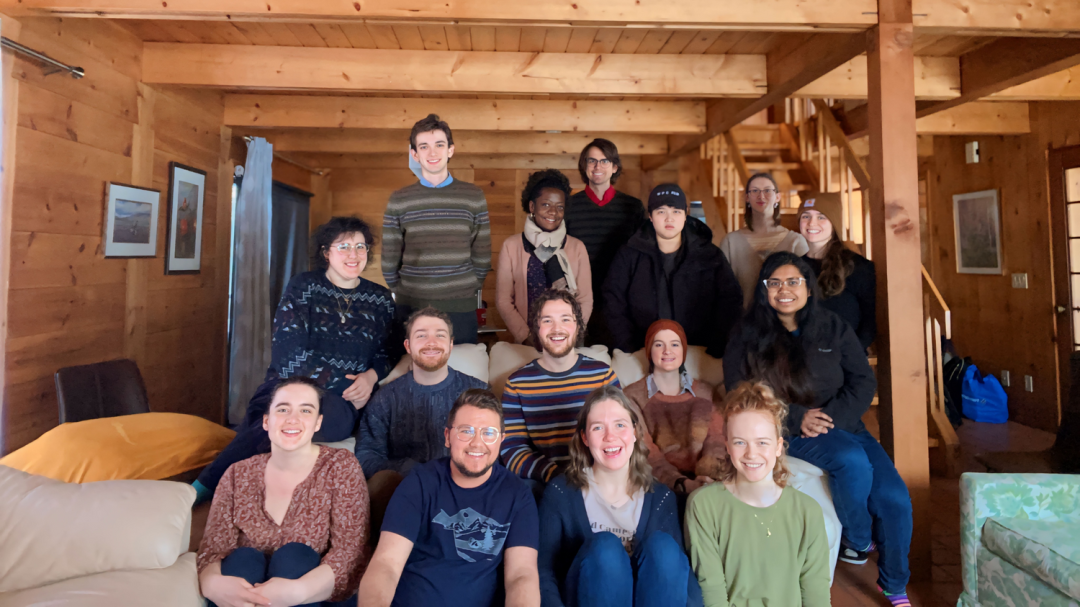
St. Martha’s Chapel has its origins in the ecumenical chaplaincy at McGill University and regularly hosts events in partnership with the institution, such as interfaith text studies or the annual Discover Spiritual McGill Fair.

“The chapel’s name was inspired by an earlier iteration of the ministry called ‘St. Martha of the Basement,’ highlighting the centrality of hospitality and inclusivity to the mission,” says Rev. Jean-Daniel Ó Donnċada, the former director and chaplain now serving as the Canada region’s national pastor.

It has been a shared ministry between the Anglican Church of Canada and the United Church of Canada for decades, with the Christian Church (Disciples of Christ) in Canada becoming a sponsor in 2015.

In 2020, the ministry changed its name from McGill Ecumenical Chaplaincy and evolved its direction to be a young adult-led organization open to working young adults and students attending other universities with most members being professionals in their 20s and 30s.

One such student turned professional is Sarah Wicks-Potter, who became the interim director and chaplain last summer. 

“I moved to Montréal when I was 18 for university. My aunt and uncle set me up on a friend date with the one person they knew in the city, and she invited me to Bible study. She brought me to St. Martha’s and I’ve been there about every week since,” she recalls. “I met my roommates, some of my best friends, my husband, and a couple whose son I’m now a godmother to at the chapel.”

In addition to providing pastoral care in both English and French (with help from Rev. Jean-Daniel for the French speakers), Sarah is now the one leading Bible study for her community of faith. This weekly event is open to adults ages 18 to 40 and provides time to engage in spiritual practices and share a meal. 

“It might be hard to see young people in the church without St. Martha’s,” she explains, “and you can really see that at Bible study.”

The chapel also provides evening worship services on the first and third Sundays of each month in cooperation with Cathédrale Christ Church (Christ Church Cathedral), which donates two rooms in its lower level for the ministry to use. St. Martha’s services are casual and are open to all who wish an evening time to pray. 

“Wherever you are on your journey with Jesus, whether you’re doubting or angry, the people at St. Martha’s are always there to accompany you, not convert you,” clarifies Sarah. “Even when you graduate and move away, that doesn’t change.”

Sometimes this support can be joyous, too. When a member was baptized in February, all the people from St. Martha’s showed up. In June, they plan to attend a play written by one of their members and be that “obnoxious group of young people in the audience.”

The community even provides more “logical support,” as Sarah puts it. Last fall, one of its members was recovering from surgery, so they put together a meal train. Whatever way this support looks like, it ultimately depends on what people need and how they need it. 

The chapel is also LGBTQ+ affirming and an incredibly vocal space for queer rights within Christianity. While Montréal is safe for the LGBQ+ community, not all churches in the city are.

“Part of my job is to figure out how to connect the puzzle pieces that keep our community strong,” Sarah finishes, “I like what I do a lot.”

To ensure that faith communities like St. Martha’s Chapel can continue to provide radically accepting places of worship in their neighbourhoods, make a gift to the 2024 Pentecost Offering. Received in most congregations on Sundays, May 12 and May 19, this Special Day Offering is equally divided between the region in which it’s collected to support local new church development and New Church Ministry, which trains, equips, assists, and multiplies emerging and affiliating leaders and their congregations. Thank you for your generous support.

WHOSOEVER: “God did not create you to hate you”

The Greater Kansas City region is the most compact regional ministry of the Christian Church (Disciples of Christ) in the United States and Canada.

There are open and affirming congregations as well as places of worship where most of the members are people of color (POC). But before 2017, if you were searching for a faith community of both, you would be hard-pressed to find one.

That was until Rev. Dr. Dionne T. Boyice created WHOSOEVER: Community of F.A.I.T.H. (Finding Answers in the HEALING), a Facebook group that provides a safe space for all LGBTQ+ people, especially POC, who want to worship God.

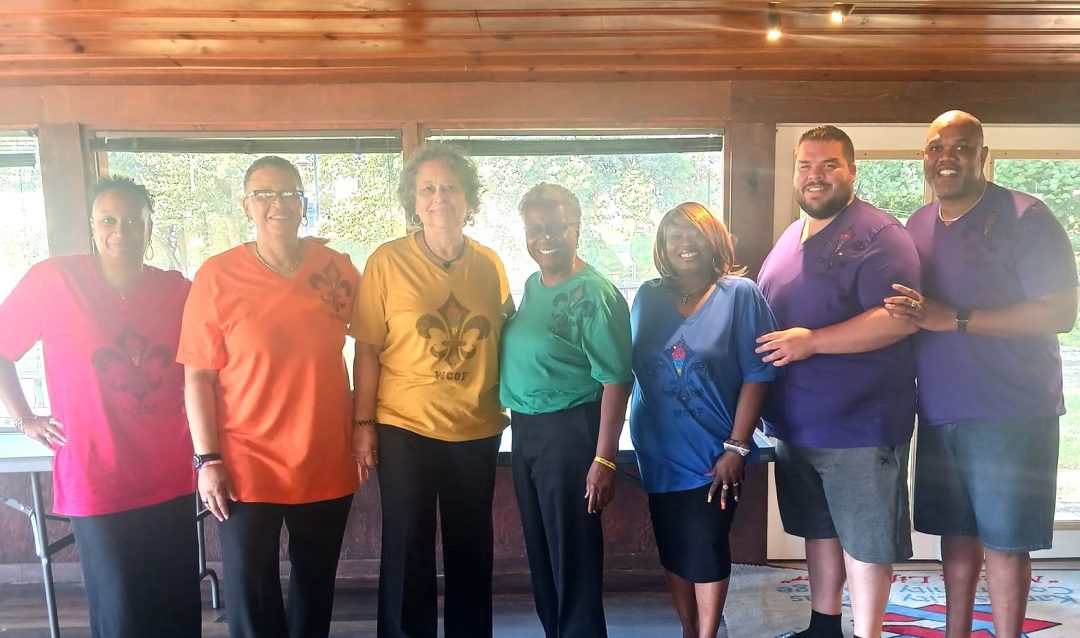
Today, Dionne and the 1,200+ members of WHOSOEVER: Community Of F.A.I.T.H. are active online, with those living in Kansas City, KS and MO gathering in person once a month to worship and provide outreach services. These efforts are made possible with the gifts made to the Pentecost Offering, which supports leaders and communities as the Spirit calls them into being.

Seven years ago, Dionne preached at the first Black PRIDE worship service in Kansas City, MO. Following her sermon, about 25 attendees inquired about her church, citing the lack of local congregations led by an LGBTQ+ POC. Back then, Dionne didn’t have a church nor was she a pastor. But after so many people approached her, she felt called to create a community of faith where Black LGBTQ+ folks, who were suffering from religious trauma, spiritual abuse, and/or moral injury, could praise God.

“I’ve been a Baptist for most of my life. In my experience, the Black church is so vocal when they describe homosexuality as ‘the work of the devil’ or a sin, that they push Black LGBTQ+ people out the door,” shares Dionne. “But these people are still searching for and desire a relationship with God.”

So, she created WHOSOEVER, taking inspiration for its name from the John 3:16 Bible verse “For God so loved the world, that God gave the only begotten Son, so that whosoever believes in Him will not perish, but have everlasting life.” For Dionne, there are no exceptions to the scripture the way it is written – we are all loved by Christ on the cross, whosoever we are.

“The word ‘whosoever’ means anybody, any person at all,” she explains. “If we teach scripture the way it was meant to be understood, then it’s a difficult argument to make that God sent the Son to be sacrificed for only a select group of people.”

Dionne does not describe WHOSOEVER as a “gay church” or a “Black church,” even though most of its members identify as such. She doesn’t want to exclude anyone who may not identify as LGBTQ+ or Black from attending, being a part of, or worshipping at WHOSOEVER.

“Believe it or not, many POC who are LGBTQ+ don’t want to be a part of an LGBTQ+ church because they were told they would go to hell if they did,” Dionne reveals. “The people who are comfortable in their own skin have no problem with coming right on in.”

In 2018, Dionne reached out to Greater Kansas City Regional Minister Rev. Bill Rose-Heim, who introduced her to National Convocation Administrative Secretary and Associate General Minister Rev. Dr. Delesslyn Kennebrew, the Regional Minister for New and Transforming Churches at the time. This connection saw Dionne be a part of the new church cohort for the next two years.

In the meantime, her congregation connected with other marginalized communities, as well as organizations like PFLAG. WHOSOEVER participated in Kansas City’s PRIDE celebrations and conducted worship services via Zoom. Members joined virtually from Canada, the United Kingdom, Liberia, and Kenya – in fact, most of WHOSOEVER’s virtual members are located outside of Kansas City.

“We are a global ministry,” Dionne points out, “because there are so many cultures that still teach an embedded theology learned hundreds of years ago. Unfortunately, they’re not open to a broader context or theology.”

In 2020, she became ordained through the United Church of Christ and moved out east to serve a congregation in Havertown, PA. Despite the distance, Dionne maintained her Kansas City roots and built partnerships with local Disciples, including Minister of New Church Strategies Rev. Dr. Jose Martinez. For PRIDE of that year, he featured Dionne and her wife on his podcast StoryWagen, where they discussed the challenges in finding healing from a church that continues to hurt so many.

“LGBTQ+ people are growing in their faith, rejecting what they’ve been taught about their identity, and are feeling more accepted,” she says. “They’re learning that they are valued by God, no matter who they are or what they’ve done.”

Dionne returned from Pennsylvania in 2022 and the people of WHOSOEVER began to worship together in person once a month. They have gathered at other churches, Dionne’s house, a woodshop, coffee shops, and, even, a grocery store. The following year, she became a Disciple and took part in New Church Ministry’s first-ever hybrid Leadership Academy, which provides educational opportunities for faith leaders, students, and ecumenical partners, no matter their church’s life stage.

Dionne also started taking the first steps in affiliating her congregation with the denomination. 

“I came up with ‘God Did Not Create You To Hate You’ as the tagline for WHOSOEVER because I myself used to associate the church’s practice of pushing us out, with what God wanted,” reflects Dionne. “When churches do that, people stay away from church. We must learn to disconnect the human institution from the body of Christ.”

Church members currently worship in person on the campus of the Kansas City Kansas Community College. In June, they will finally have their own space.

Outside of worship, the people of WHOSOEVER engage in community service. Once a month, they serve free hot soup to houseless neighbors, and they’ve even been able to assist others with their finances and rent.

As for the future and the well-being of LGBTQ+ POC, Dionne believes that the younger generation is “our saving grace.”

“They won’t attend churches that refuse to welcome their friends and family just because they are LGBTQ, or drink, or have children out of wedlock,” she concludes. “They are really trying to live out the answer to, ‘what would Jesus do?’”

To ensure that congregations such as WHOSOEVER can continue to provide its vital services to LGBTQ+ folks, POC, and other marginalized communities, participate in this year’s Pentecost Offering. Half of the gifts made on Sundays, May 12 and 19 stay in the region in which they’re collected to support local emerging and affiliating faith communities. The other half goes to New Church Ministry to support events like Leadership Academy, as well as coaching for new church leaders, educational webinars, and much more.

A reflection on Pride Month from AllianceQ
“You gave us these bodies. And You called them good.” 

The line is from the song These Bodies by The Many. As Pride Month unfolds, AllianceQ invites individuals, churches, general ministries – every body – to wave the flags, dance, sing, (dance and sing in drag?), join in parades and protests, paint signs, Paint the World. Paint the World?

Continue reading “A reflection on Pride Month from AllianceQ”

Finding faith and community in the margins with Comunidad Limen

“Have you seen the movie Luca?”

Rev. Pedro Ramos Goycolea

Rev. Pedro Ramos Goycolea, the pastor of Comunidad Limen Christian Church, was trying to find the right words that would describe the ministry of his emerging community of faith. As the organizer of the first official Latinx, Spanish-speaking, open and affirming congregation in the Christian Church (Disciples of Christ), he’s often felt compelled to “justify” his theology in the past. And as a father of two young boys, he’s also compelled to watch various animated films. 

Continue reading “Finding faith and community in the margins with Comunidad Limen”